
What Phoenix Residents Should Know Before Buying OTC Hearing Aids
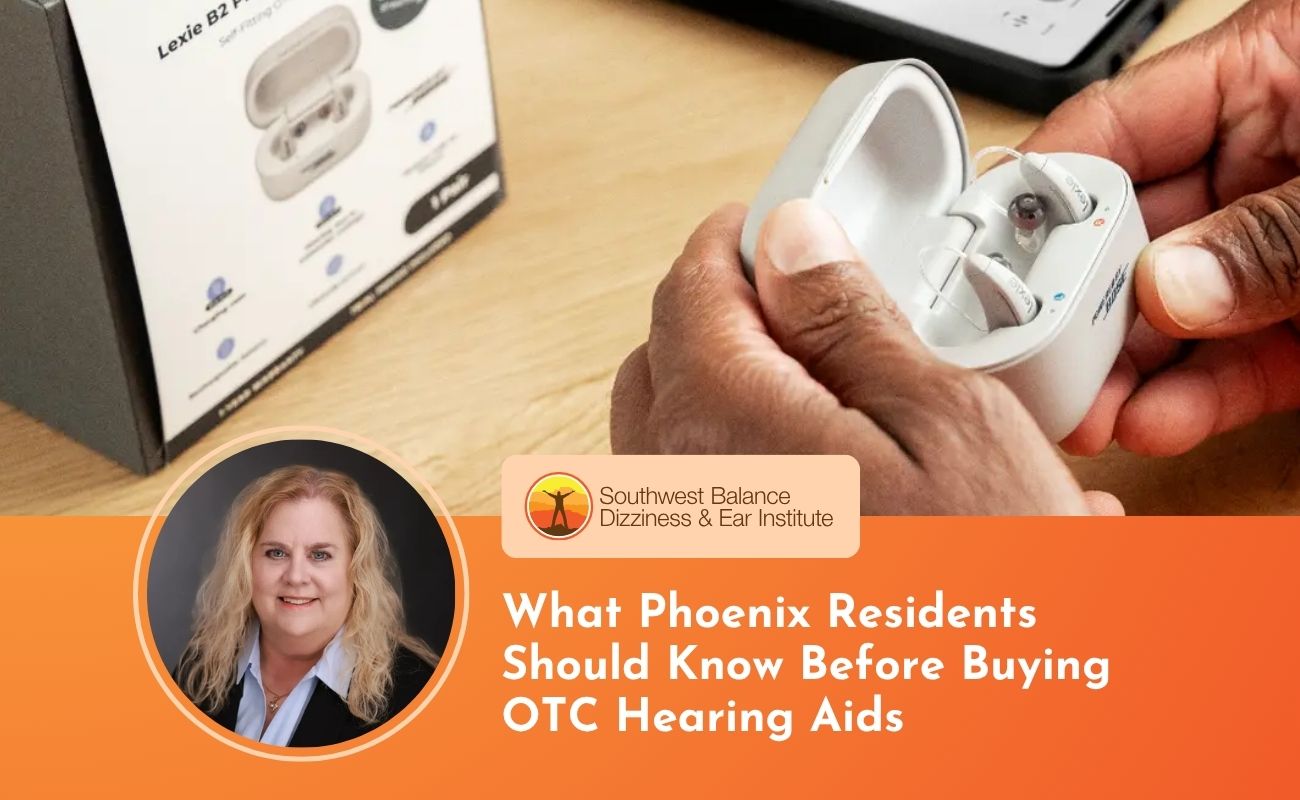
Since the FDA opened the over-the-counter (OTC) hearing aid market in October 2022, more adults are asking whether they can skip the audiologist and pick up a hearing aid at a pharmacy or online. The short answer is: it depends. OTC devices are a legitimate option for a specific group of people — but they are not the right fit for everyone, and understanding the difference could save you a significant amount of frustration.
Who OTC Hearing Aids Are Actually Designed For
The FDA's OTC category was created for adults 18 and older with perceived mild-to-moderate hearing loss. That's a fairly narrow window. If you occasionally struggle to follow conversations in noisy settings or find yourself turning up the TV a bit, you may fall into that range.
OTC devices are not appropriate for people with:
- Moderate-to-severe or profound hearing loss
- Single-sided hearing loss
- Hearing loss accompanied by tinnitus, dizziness, or ear pain
- A history of ear surgery, drainage, or sudden hearing changes
If any of those apply to you, an OTC device is unlikely to meet your needs — and could actually delay getting the right help.
The Cost Question (and What It Does and Doesn't Tell You)
OTC hearing aids typically range from $800 to $1,500 per pair. Professionally fitted hearing aids in Phoenix generally run between $3,000 and $6,000, depending on the technology level.
That gap is real. But it doesn't tell the whole story.
What you get with a professionally fitted device goes beyond the hardware. An audiologist conducts a complete hearing evaluation, identifies the type and degree of your hearing loss, and programs the hearing aids to match your specific audiogram. Follow-up appointments, fine-tuning, and long-term support are part of the process. Flexible financing options — including interest-free plans — are also available at practices like ours, which means the upfront cost doesn't have to be a barrier.
With OTC devices, you self-select your settings and adjust through an app. For someone with mild, uncomplicated hearing loss and the patience to experiment, that may work reasonably well. For most people with meaningful hearing difficulty, the self-fitting process often leads to devices that are either under- or over-amplified — and eventually underworn.
What Professional Fitting Actually Involves
When you come to see one of our audiologists, we start with a thorough diagnostic evaluation — not just a quick screening. That includes testing across multiple frequencies, speech recognition assessment, and a detailed conversation about how your hearing loss is affecting your daily life.
From there, we program hearing aids to your individual hearing profile using objective measurements. The devices we fit are also from manufacturers investing heavily in AI-based sound processing. Starkey Omega AI, for example, uses deep neural network directionality to improve speech clarity in challenging environments. ReSound Vivia features a separate AI chip trained on millions of spoken sentences to separate speech from background noise. Phonak Audéo Infinio Sphere uses dual-chip architecture with real-time AI processing for speech-in-noise performance.
These are not features you'll find in OTC devices, which are generally built on simpler, fixed processing platforms.
The Follow-Up Care Gap
One of the most overlooked differences between OTC and professionally fitted hearing aids is what happens after you start wearing them.
Hearing changes. Your preferences change. The environments you're in change. Professional hearing care includes ongoing adjustments, troubleshooting, and re-evaluation as needed. Studies consistently show that patients who receive professional follow-up care get more consistent benefit from their devices than those who self-manage.
With OTC aids, that support structure simply isn't there. You're largely on your own after purchase.
Our Recommendation for Phoenix Residents
If you're experiencing any degree of hearing difficulty, the most reliable first step is a professional hearing evaluation. It gives you an accurate picture of your hearing and what's actually driving your difficulties — information you can't get from a self-assessment quiz or an OTC fitting app.
If your results show mild loss and an OTC device is genuinely appropriate for you, we'll tell you that honestly. Our goal is to point you toward the right solution, not simply the most expensive one.
For most people seeking meaningful, lasting improvement in their hearing, a professionally fitted device with ongoing audiologist support delivers results that OTC options can't consistently match.
Schedule a Hearing Evaluation in Phoenix
If you're unsure whether an OTC device is right for you — or if you've already tried one and aren't satisfied with the results — we're here to help. Our audiologists at Southwest Balance, Dizziness & Ear Institute offer comprehensive hearing evaluations and take the time to understand your specific needs before making any recommendations. Call us at (602) 265-9000 or visit us at 4004 N 7th St., Phoenix, AZ 85014 to schedule your appointment.

Request an appointment below.
Get in Touch
Conveniently located near the intersection of 7th Street and Indian School Road.

Southwest Balance, Dizziness & Ear Institute (formerly Arizona Balance & Hearing Aids)
4004 N 7th St.Phoenix, AZ 85014